Ballinahown Biodiversity Mural
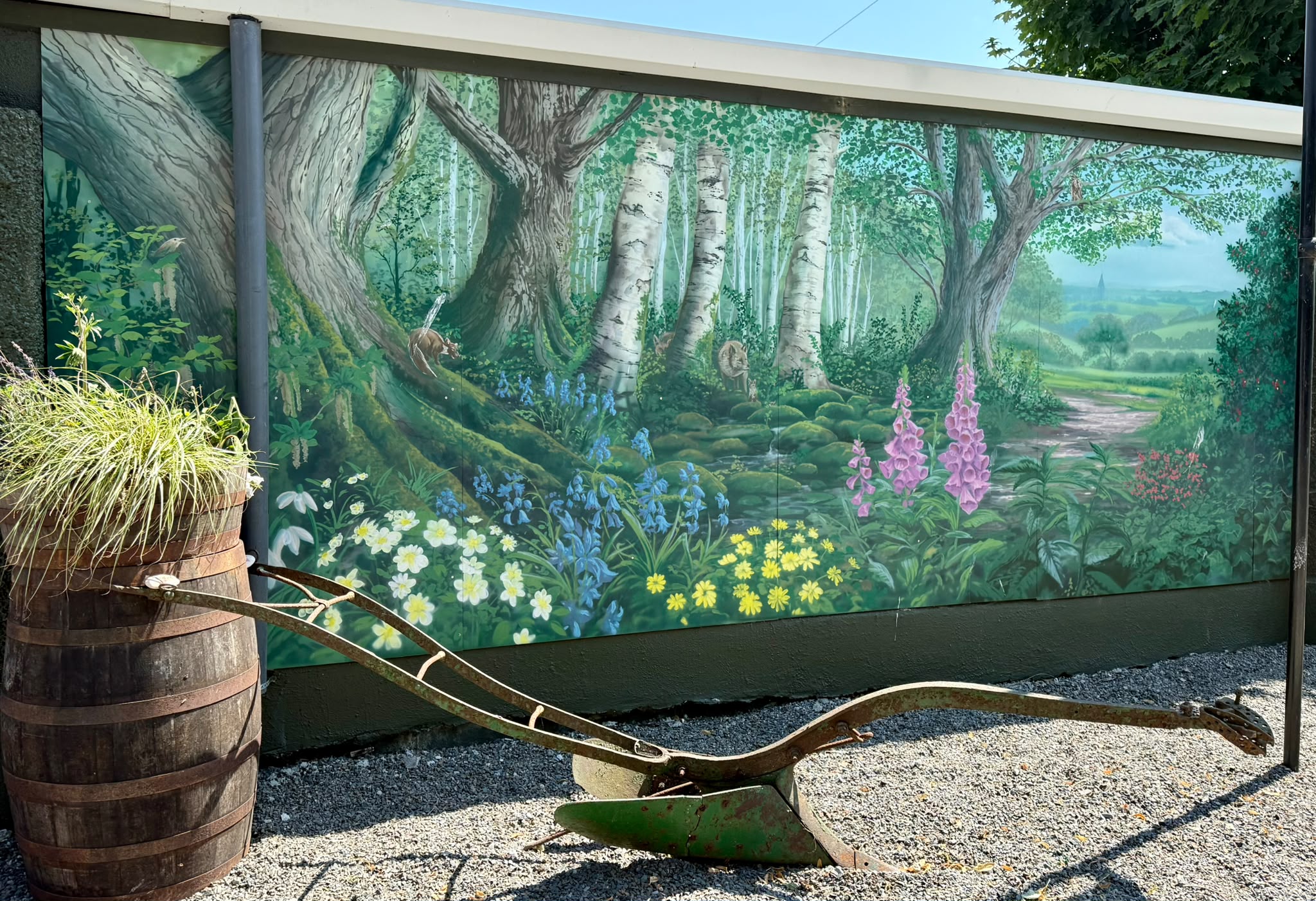
Painted by Shane Turner
Commissioned by Ballinahown Community Development using funds raised through the community 50/50 Draw
A mural about connection
Ballinahown uses public art, signs and QR-linked information to help residents and visitors recognise the species around them. By learning what each plant contributes, we can make better choices about planting, mowing, hedgerow care and the protection of existing habitats.
The content is deliberately simple and informative. It is intended for residents, visitors, schoolchildren and Tidy Towns judges, showing that the mural is part of Ballinahown’s wider commitment to biodiversity, environmental learning and community care.
| What is biodiversity?
Biodiversity means the variety of living things – plants, animals, fungi and microorganisms – and the relationships between them. No species works alone. A flower may feed a bee, the bee may pollinate a fruiting shrub and the fruit may feed a bird that spreads the seed.
|
How Ballinahown supports biodiversity
The mural is one part of a wider community approach that combines habitat care, thoughtful planting and public learning.
| Protecting connected habitats
Native hedgerows around the village contain plants such as hawthorn, blackthorn and elder. The River Worm, mature woodland and riverside walk connect wet, wooded and hedgerow habitats. |
| Planting with purpose
Community planting increasingly uses perennial and pollinator-friendly choices. Selected grassy areas are left longer, with paths cut through them, so flowers can bloom and wildlife can find food and shelter. |
| Creating homes for wildlife
The butterfly garden, native Irish black bee apiary and village log piles provide food, nesting opportunities and shelter for insects and other animals. |
| Planning and measuring progress
Ballinahown’s Community Biodiversity Action Plan guides practical work. |
| Learning in the landscape
Information signs, plant guides, nature activities and QR codes make biodiversity visible and understandable to residents, children, visitors and community groups. |
| Turning art into action
This mural helps people identify familiar plants and understand why they matter. Awareness is an important first step towards protecting habitats and changing everyday practice. |
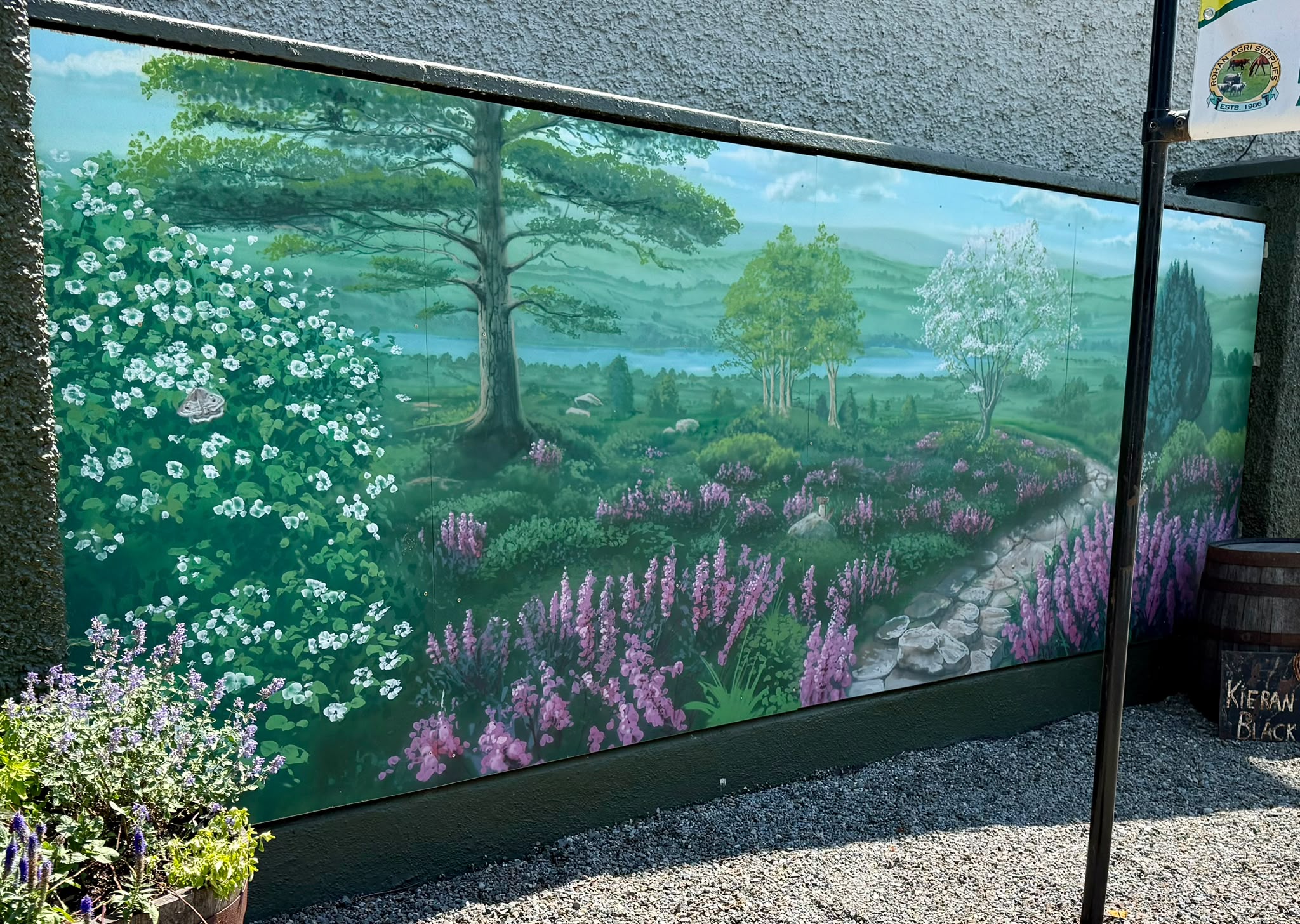
Flora and fauna represented in the mural
Each entry gives a simple description of the species, its connection with Ireland and its value for biodiversity.
Woodland and woodland floor
Tall native trees, understorey shrubs and spring flowers create layers of food and shelter.
Sessile oakQuercus petraea | Native This native Irish oak has grown here since after the last Ice Age and supports insects, birds, fungi, mosses and lichens, with its acorns feeding wildlife in autumn. |
Pedunculate oakQuercus robur | Native This native lowland oak supports insects, birds, fungi and lichens, while its acorns, rough bark, hollows and deadwood provide valuable food and shelter. |
Downy birchBetula pubescens | Native This native birch was among the trees to return after the last Ice Age and supports insects and birds while allowing wildflowers to grow beneath its light canopy. |
Silver birchBetula pendula | Native This native birch grows well on light or disturbed soils and supports caterpillars and birds while its open canopy adds variety to woodland habitat. |
Wych elmUlmus glabra | Native This native Irish elm survives in woods and hedgerows despite Dutch elm disease and provides food and habitat for insects, birds, mosses, lichens and fungi. |
HazelCorylus avellana | Native Hazel has grown in Ireland for thousands of years and supports biodiversity through its early pollen, nutritious nuts, sheltered growth and close relationship with woodland fungi. |
HollyIlex aquifolium | Native This native evergreen is rooted in Irish woodland and folklore, providing flowers for insects, berries for birds and dense year-round shelter for wildlife. |
IvyHedera helix | Native This native climber grows on trees, walls and hedges, offering late autumn nectar, winter berries and dense shelter for insects and nesting birds. |
SnowdropGalanthus nivalis | Introduced and naturalised Snowdrop was introduced to Ireland but is now widely naturalised, and its early flowers provide nectar and pollen on mild winter and spring days. |
PrimrosePrimula vulgaris | Native This familiar native flower grows along Irish banks, hedgerows and woodland edges, providing valuable early food for bees and other insects. |
BluebellHyacinthoides non-scripta | Native The native bluebell is closely linked with old Irish woodland and provides spring nectar for bees and other insects before the tree canopy closes. |
Lesser celandineFicaria verna | Native This native spring flower grows in damp woods, hedgebanks and stream sides, providing early pollen and nectar when few other plants are in bloom. |
FoxgloveDigitalis purpurea | Native This native Irish wildflower grows on banks, roadsides and woodland clearings, and its deep tubular flowers are especially valuable to bumblebees. |
NettleUrtica dioica | Native This widespread native plant supports many insects and is an essential food plant for the caterpillars of peacock, small tortoiseshell and red admiral butterflies. |
Scots pinePinus sylvestris | Native, with a complex history Scots pine has an ancient but complex history in Ireland, and its seeds, evergreen branches and older bark support birds, red squirrels, insects, fungi and lichens. |
AshFraxinus excelsior | Native This native tree has long been part of Irish woods, hedgerows and culture, supporting insects, fungi, lichens, nesting birds and seed-eating wildlife. |
Wild cherryPrunus avium | Native This native Irish tree, also called gean, provides spring blossom for pollinating insects and cherries for birds and mammals. |
YewTaxus baccata | Native This long-lived native evergreen is associated with ancient woods and churchyards, providing dense shelter, nesting cover, berries for birds and bark for lichens. |
Hedgerows and scrub
Living field boundaries act as miniature woodlands and safe wildlife corridors.
SpindleEuonymus europaeus | Native This native shrub grows in hedgerows and woodland edges, where its flowers feed insects, its colourful fruits feed birds and its branches provide cover. |
Guelder roseViburnum opulus | Native This native shrub grows in damp woods, riverbanks and hedgerows, providing flowers for insects, berries for birds and dense wildlife cover. |
HawthornCrataegus monogyna | Native This iconic native hedgerow tree is deeply connected with Irish farming and folklore, providing blossom for pollinators, berries for wildlife and safe nesting cover. |
ElderSambucus nigra | Native This long-established native shrub grows around hedgerows, farms and woodland edges, providing flowers for insects, berries for birds and habitat within older stems. |
Crab appleMalus sylvestris | Native Ireland’s native wild apple grows in old woods and hedgerows, providing spring blossom for pollinators, fruit for wildlife and habitat for insects, fungi and lichens. |
RowanSorbus aucuparia | Native This native tree of Irish woods and hillsides has strong folklore associations, with spring flowers feeding insects and autumn berries feeding birds. |
BlackthornPrunus spinosa | Native This native thorny shrub is common in Irish hedgerows, where its early blossom feeds pollinators, sloes feed wildlife and dense growth provides secure shelter. |
Wild roseRosa species | Native group Ireland has several native wild roses whose open flowers feed insects, hips feed birds and mammals and thorny stems provide nesting cover. |
Meadows, heath and verges
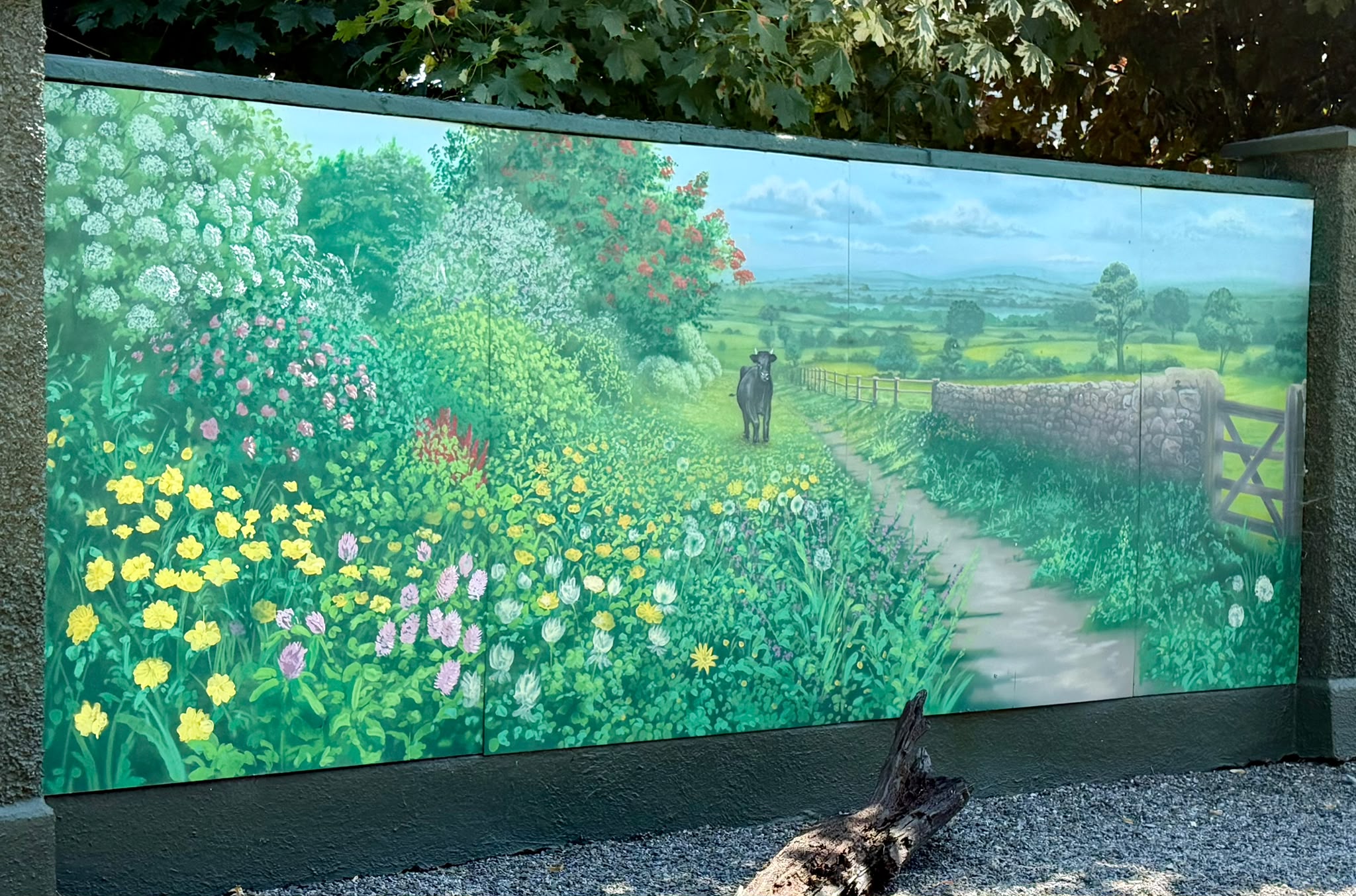
Flower-rich grassland supplies nectar, pollen, seeds and caterpillar food.
HeatherCalluna vulgaris | Native This native plant is characteristic of Irish bogs, heaths and uplands, providing late-summer nectar for insects and dense shelter for small wildlife. |
ButtercupRanunculus species | Native group Several buttercup species are native to Irish grasslands and verges, where their open yellow flowers provide pollen and nectar for small insects. |
Red cloverTrifolium pratense | Native This native meadow plant provides deep, nectar-rich flowers for bumblebees and works with soil bacteria to naturally improve soil fertility. |
White cloverTrifolium repens | Native This widespread native plant flowers for a long season, feeding many bees while also improving soil fertility through nitrogen fixation. |
Self-healPrunella vulgaris | Native This low-growing native wildflower thrives in lawns, verges and grassland, where its purple flowers feed bees and other insects. |
VetchesVicia species | Native group Several native vetch species grow in Irish grasslands and hedgerows, providing flowers for bees, food for wildlife and natural enrichment of the soil. |
ShamrockUsually Trifolium dubium | Native cultural plant Shamrock is a traditional Irish name most often linked with native lesser trefoil, a small clover that feeds pollinating insects and helps enrich the soil. |
DandelionTaraxacum officinale aggregate | Native group These widespread native wildflowers grow in lawns, verges and fields, providing nectar and pollen over a long season and seeds for birds. |
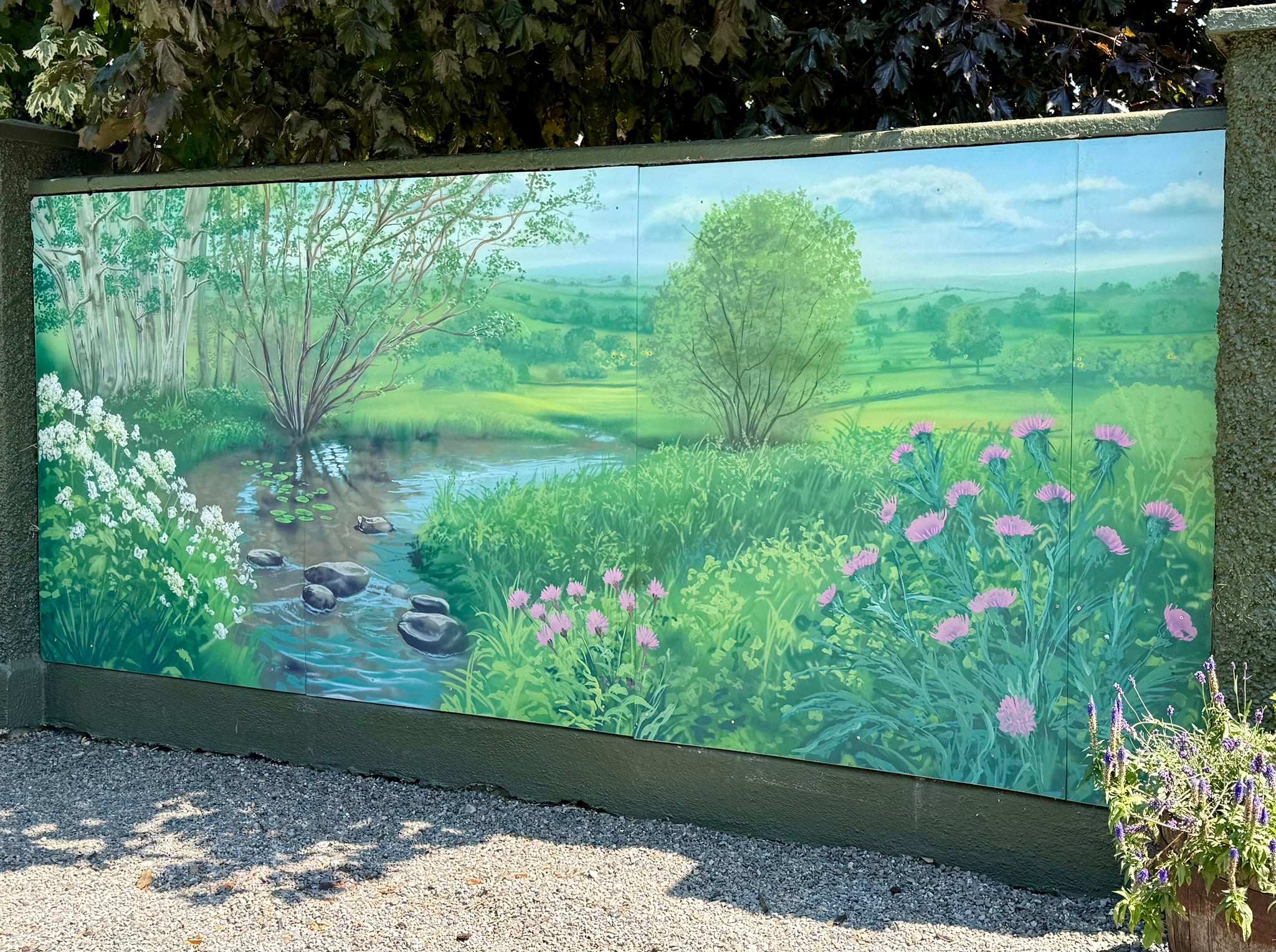
KnapweedCentaurea nigra | Native This native grassland flower provides long-lasting nectar for bumblebees, hoverflies and butterflies, followed by seeds for wildlife later in the year. |
ThistleCirsium species | Native group Ireland has several native thistle species whose nectar-rich flowers feed bees and butterflies and whose seeds are especially valuable to goldfinches. |
Wetlands and riverbanks
Water, damp soil and riverside vegetation support a distinctive web of life.
AlderAlnus glutinosa | Native This native wetland tree grows beside rivers and lakes, helping stabilise banks while providing food and habitat for insects, birds, fungi and lichens. |
Goat willowSalix caprea | Native This native willow grows in damp ground and woodland edges, providing vital early pollen and nectar for queen bumblebees and leaves for caterpillars. |
Grey willowSalix cinerea | Native This native willow grows in wetlands and damp scrub, providing essential early food for pollinators and creating shelter within valuable wet habitats. |
MeadowsweetFilipendula ulmaria | Native This native plant grows in damp meadows and along waterways, where its scented flowers attract many insects and its dense growth provides cover. |
Devil’s-bit scabiousSuccisa pratensis | Native This native flower of damp meadows and bog edges provides late-season food for bees and butterflies and is the main caterpillar food plant of the marsh fritillary. |
Wildlife
Red squirrelSciurus vulgaris | Native Ireland’s native red squirrel depends on woodland for seeds, nuts and fungi and helps spread seeds and fungi by carrying and burying food. |
ButterfliesVarious species | Native group Ireland’s native butterflies depend on suitable flowers and caterpillar food plants, helping with pollination and providing food for birds and other wildlife. |
Understanding the labels
| Native
A species that arrived and became established without being introduced by people. |
| Naturalised
A species introduced by people that now grows and reproduces in the wild. |
Acknowledgements
The Ballinahown Biodiversity Mural was painted by artist Shane Turner.
It was commissioned by Ballinahown Community Development using funds raised through the community 50/50 Draw. The project reflects the contribution of local people who support the care, improvement and biodiversity of the village.